

Does clear vinyl tarp block wind?
As a supplier of Clear Vinyl Tarps, I've often been asked whether these tarps can effectively block wind. This question isn't just relevant for casual users but also for industries that rely on tarps for protection and containment. In this blog post, I'll delve into the science behind wind resistance, the properties of clear vinyl tarps, and real - world applications to answer this question comprehensively.
The Science of Wind Resistance
Wind is essentially moving air, and when it encounters an object, it exerts a force on that object. The force of the wind depends on several factors, including the wind speed, the density of the air, and the surface area of the object facing the wind. According to Bernoulli's principle, as the speed of the wind increases, the pressure exerted by the wind decreases. When a tarp is exposed to wind, it needs to withstand the pressure differences and the physical force of the moving air.
Materials with high density and strength are generally better at blocking wind. They can resist the force of the wind without being easily displaced or damaged. The flexibility of the material also plays a role. A material that is too rigid may break under the stress of strong winds, while a material that is too flexible may flap around, reducing its wind - blocking efficiency.
Properties of Clear Vinyl Tarps
Clear vinyl tarps are made from polyvinyl chloride (PVC), a synthetic plastic polymer. This material has several properties that contribute to its ability to block wind.
Firstly, clear vinyl tarps are relatively dense. The density of PVC gives it a certain mass, which helps it to stay in place when exposed to wind. The molecules in PVC are tightly packed, creating a solid barrier that the wind has to work against.
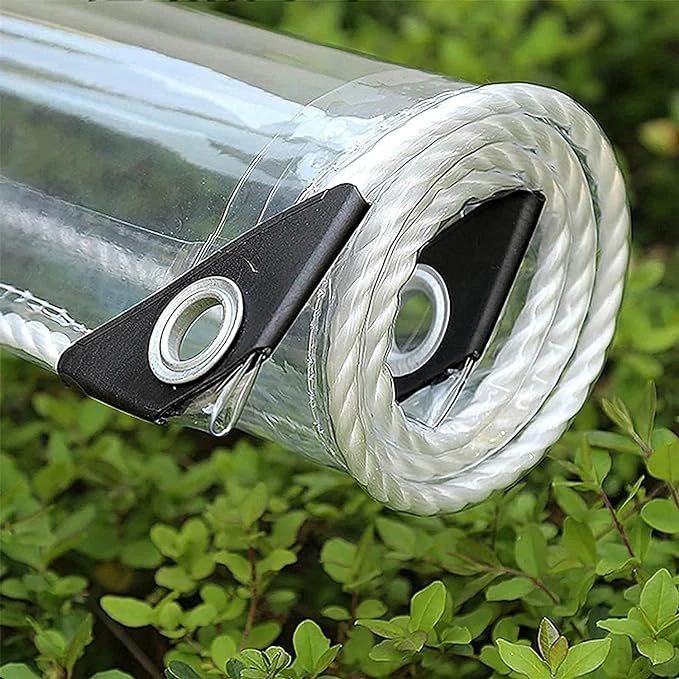

Secondly, clear vinyl tarps are strong. They have a high tensile strength, which means they can withstand stretching forces without tearing. This strength allows them to resist the pulling and tugging of the wind. For example, our Clear Vinyl Tarp 20 Mil is made with a thicker gauge of vinyl, providing even greater strength and wind resistance compared to thinner tarps.
In addition, clear vinyl tarps are flexible. This flexibility allows them to bend and move with the wind to some extent, rather than breaking under the stress. They can adapt to the changing direction and intensity of the wind, maintaining their integrity as a wind - blocking barrier.
Real - World Applications and Wind - Blocking Performance
Clear vinyl tarps are used in a variety of real - world applications where wind blocking is important.
In construction sites, clear vinyl tarps are often used to enclose work areas. They can block wind, dust, and debris, creating a more controlled environment for workers. For example, when building a high - rise building, the upper floors are often exposed to strong winds. By using clear vinyl tarps, construction companies can protect the workers and the building materials from the wind, ensuring a safer and more efficient work process.
In agricultural settings, clear vinyl tarps are used to cover greenhouses. They can block the wind while still allowing sunlight to penetrate, creating a suitable environment for plant growth. The wind - blocking ability of the tarps helps to maintain a stable temperature and humidity inside the greenhouse, protecting the plants from the harsh effects of strong winds.
In outdoor events, clear vinyl tarps are used as windbreaks. They can be set up around the perimeter of a venue to protect guests from the wind. For instance, at a beach wedding, clear vinyl tarps can be used to create a sheltered area, allowing the event to proceed smoothly even on a windy day.
However, it's important to note that the wind - blocking performance of clear vinyl tarps can be affected by several factors. The installation method is crucial. If the tarp is not properly secured, it may flap in the wind, reducing its effectiveness. The size and shape of the tarp also matter. A large, flat tarp may be more prone to wind damage than a smaller, more irregularly shaped tarp.
Comparing Clear Vinyl Tarps with Other Wind - Blocking Materials
When comparing clear vinyl tarps with other wind - blocking materials, such as canvas or mesh tarps, clear vinyl tarps have some distinct advantages.
Canvas tarps are made from natural fibers, which are generally less dense and less strong than PVC. While canvas tarps can provide some wind protection, they are more likely to tear or be damaged in strong winds. They also tend to absorb water, which can make them heavier and less effective as windbreaks.
Mesh tarps, on the other hand, are designed to allow some air to pass through. While this can reduce the wind load on the tarp, it also means that they are not as effective at blocking wind as clear vinyl tarps. Mesh tarps are often used in situations where ventilation is important, but they may not be the best choice for complete wind protection.
Conclusion
In conclusion, clear vinyl tarps can effectively block wind. Their density, strength, and flexibility make them well - suited to withstand the force of the wind in a variety of applications. Whether it's for construction sites, agricultural greenhouses, or outdoor events, clear vinyl tarps can provide reliable wind protection.
If you're in need of a high - quality wind - blocking solution, our Clear Vinyl Tarp and Thicken Transparent Tarp, Clear Waterproof Tarpaulin are excellent options. We offer a range of sizes and thicknesses to meet your specific needs.
If you're interested in learning more about our clear vinyl tarps or would like to discuss your procurement requirements, please don't hesitate to reach out. We're here to provide you with the best products and solutions for your wind - blocking needs.
References
- "Fundamentals of Fluid Mechanics" by Bruce R. Munson, Donald F. Young, and Theodore H. Okiishi
- "Plastics Technology Handbook" by James F. Carley